What the official records actually say
On September 30, 2026, the Bank of England published the record of its Financial Policy Committee meeting held on September 25. In paragraph 10, the Committee assessed that containment, monitoring and governance could be challenged by more capable autonomous models, and it reiterated the importance of continuing to prepare for and reduce frontier-AI cyber and operational risks. These are the Committee's institutional assessments, published on the Bank's own site, and they are the most recent official marker in this analysis.
Two older official documents give the background. In an April 9, 2025 Financial Stability in Focus analysis, the Bank pointed to concentration in outside AI service providers, and the difficulty of migrating away from them, as a potential operational risk, and it described plans to monitor the market through surveys, its AI Consortium and supervisory intelligence gathering. Separately, in a speech on February 18, 2025, Michael S. Barr, then Vice Chair for Supervision at the Federal Reserve, urged institutions to recognize the limitations of artificial intelligence and to think about how humans can be positioned in the loop, and he noted that model-risk frameworks may need updates. Barr was speaking personal views, which he explicitly distinguished from the views of his Board colleagues, so his remarks are attributable context rather than adopted policy.
None of these records announces a new rule, a deadline, or an enforcement action, and none should be read as breaking news. The underlying incidents the Committee discusses are its own assessments, not independently audited events. What the three documents share is a steady institutional concern with whether organizations can contain, monitor and govern AI systems as those systems become more autonomous.
The continuity question for a smaller business
A business that connects an AI assistant to customer records inherits a dependency it may not have planned for. If the model provider degrades, changes its terms, or the automation is switched off, the work still has to finish: quotes still go out, records still get updated, customers still call. The Bank's concentration point matters here precisely because switching providers is rarely a simple swap; prompts, integrations and data formats tend to bind a workflow to one vendor.
The continuity answer is not a second model. It is a workflow designed so that the AI is a helper with bounded reach, and the business keeps the manual path open at every step.
What this means for your business
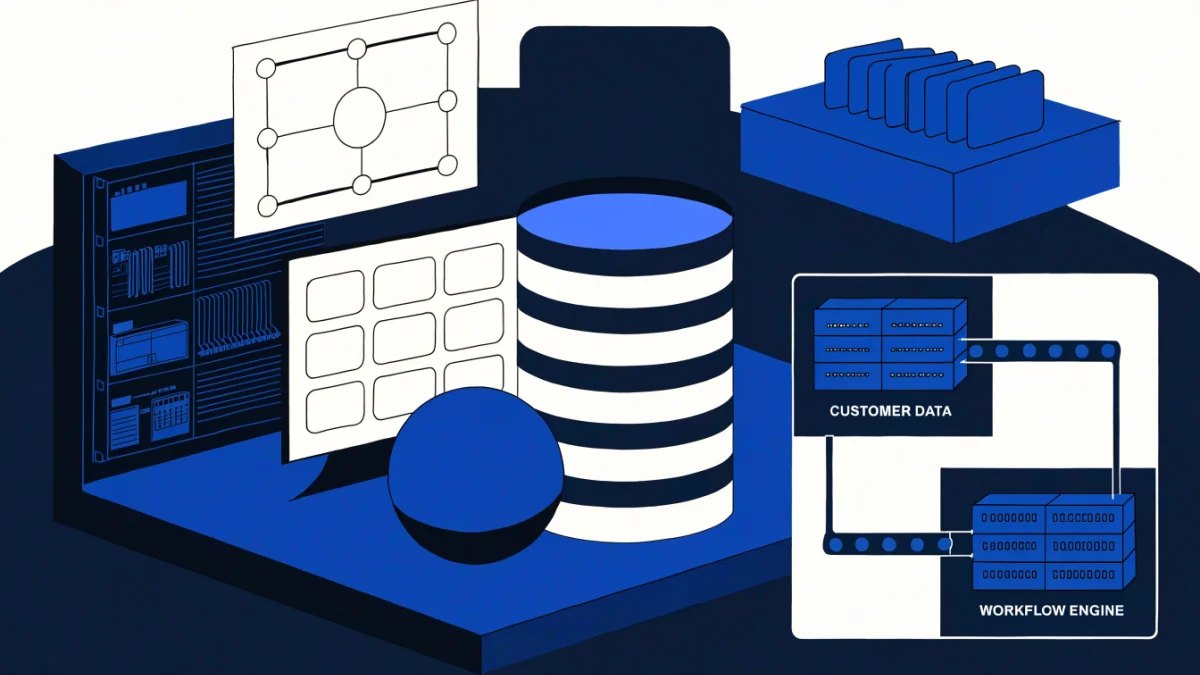
A concrete system Detailed In Design could build is a quote and customer-record workflow with continuity designed in. The assistant reads approved intake requests and a scoped set of customer data, prepares a draft quote, and stops. A named staff member approves or rejects it, and only the application, not the model, writes the record or sends the quote. Every request, decision and executed action is logged against an identity. A tested disable control turns the automation off, and the same screens let staff complete the quote by hand, so a provider outage becomes an inconvenience rather than a shutdown.
The honest limitations belong in the plan. Provider and API terms can restrict how data moves or how quickly an integration can be replaced, so the contract review happens before the build, not after. A staffed approval queue needs real reviewer capacity, or it becomes a bottleneck that quietly defeats its purpose. Data retention rules decide what the logs may keep and for how long. And any failure or rollback path has to be rehearsed, because an untested fallback is a hope, not a control. Detailed In Design claims no measured outage results or savings; the value is that customer work keeps moving when the automation cannot.
Sources and original reporting
- Financial Policy Committee Record – September 2026 (Bank of England, published September 30, 2026)
- Financial Stability in Focus: AI service providers and operational resilience (Bank of England, April 9, 2025)
- Michael S. Barr, speech on artificial intelligence and supervision (Federal Reserve, February 18, 2025)
Share this story
Use More apps or Copy link for Instagram, Threads, YouTube, and other platforms.