What Goodfire announced
On October 8, 2026, Goodfire published a research post titled Training and Deploying Production Cyber Monitors on Kimi K3. The company says it built cybersecurity monitors for two open models, Kimi K3 and GLM 5.3, and deployed them on a production inference stack. The post carries an October 8 date; the exact release time is not published.
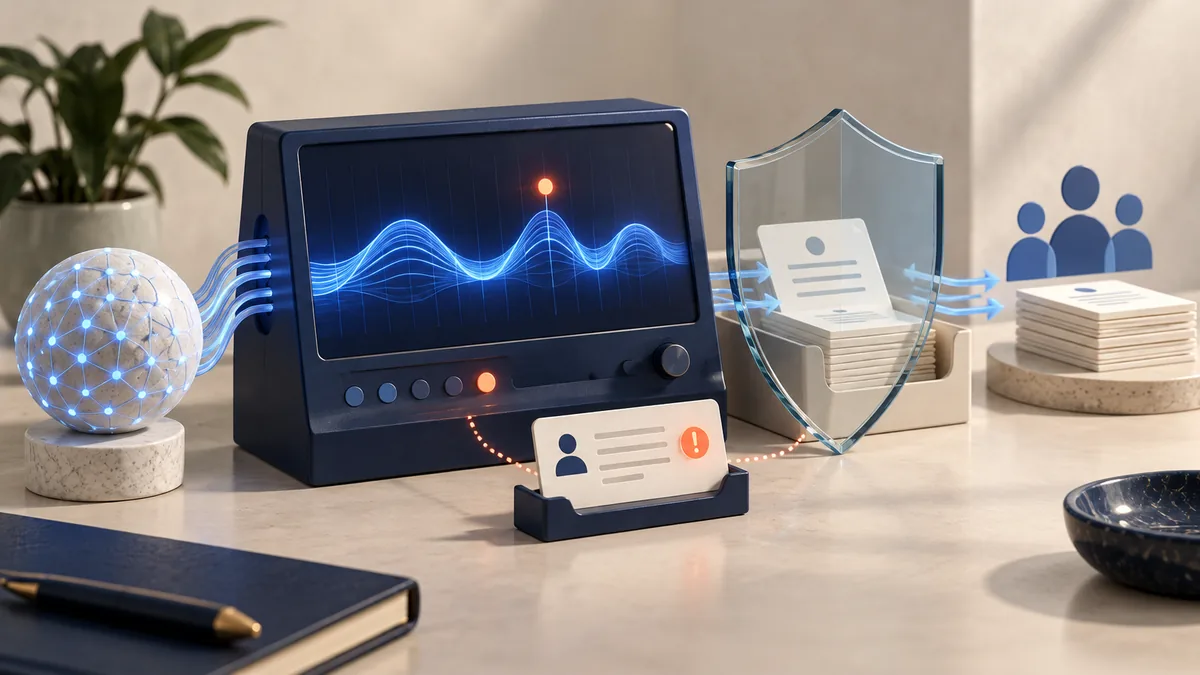
The architecture is a monitor cascade. Small probes read the model's internal activations as the inference server produces tokens, and each probe acts as a first-line filter. Only suspicious exchanges escalate to an LLM judge, which can refuse the request or let it continue. Goodfire says it extended the SGLang serving engine so probe scores are computed inside the serving stack, with monitoring events returned in the response stream.
TechCrunch independently reported the launch the same day. Aditya Mehta's October 8 report, published at 9:00 AM Pacific time, describes the monitors as watching what happens inside a model while it works rather than only reading what it writes, and reports that the monitors are available to customers of Baseten, which hosts and runs AI models for other companies. The reporting corroborates the launch. It is not an independent replication of the vendor's evaluation results, and Baseten availability is a reported access route, not a tested guarantee.
Goodfire also describes an external red-teaming evaluation. The company says FAR.AI spent two days applying a non-adaptive, static battery of jailbreak strategies to Kimi K3 with and without the monitors, and quotes FAR.AI's preliminary findings, noting that some jailbreak interactions still succeeded. That quotation is embedded by the vendor, and no separate evaluator report was verified. The announcement is distinct from Goodfire's September 17 reward-hacking research and September 9 probe-monitor explainer; those provide background, not today's release.
We deliberately omit the numerical efficacy, cost, and latency figures in the vendor's post and the TechCrunch report. The two describe different figures and denominators, and blending them would misstate the evidence. Nothing here should be read as a promise of savings, a zero-attack guarantee, or prevention.
What this means for your business
The section above is reporting. What follows is analysis from Detailed In Design. The announcement matters less for what these monitors can do than for the operating problem they address: an AI agent that can act needs supervision before its work reaches a customer. For businesses that do not serve an open model themselves, the same review discipline applies to their application workflow. The same discipline applies one level up: any AI-assisted work that prepares customer-facing output needs a defined point where a person approves it.
Detailed In Design could build that discipline as a custom system: a review dashboard for an AI-assisted document and intake workflow. The system would hold an exception queue, an action log, and role-based permissions, and it would require explicit employee approval before any customer message is sent or any record is changed. A practical example is a quote-request assistant. The assistant drafts a quote from the customer's own documents, and the draft waits in the review queue until a named staff member approves, edits, or rejects it. Nothing customer-facing leaves the business unattended.
If a business serves a compatible open model, supported monitoring events could enrich the same review queue. That integration is conditional: Goodfire and Baseten access was reported, not tested, and Detailed In Design does not claim a Goodfire connector in any system it has built. The standard review queue can be built separately, without a monitoring vendor.
The expected benefit is clearer oversight and fewer unattended handoffs. We make no numerical savings, detection-rate, or accuracy promise. The limitations are real. The system depends on client permissions and document policy, staff review capacity, and tests against actual workflow inputs. Cyber misuse detection is not proof of quote accuracy, prompt-injection resistance, legal compliance, or total security. Human review remains, and tool privileges stay restricted.
A practical next step
If your team is adopting AI assistance, start with one workflow instead of a platform decision. Map a single process from request to quote, and mark each step where a person must approve. That map becomes the specification for anything you buy or build, and it is the map we use to scope custom software around human review gates. Talk to Detailed In Design about a scoped workflow review.
Attribution and scope
The announcement details, architecture, inference optimizations, and evaluation description are attributed to Goodfire's October 8, 2026 research post. The launch, the inside-the-model framing, and Baseten availability are attributed to Aditya Mehta's TechCrunch report of October 8, 2026. Detailed In Design did not test the monitors, any model, or any serving stack. The review dashboard is a proposed custom build, not an existing product, a Goodfire integration, or a partnership. This article is an attributed synthesis of published reporting, and Detailed In Design conducted no original field reporting.
Sources and original reporting
- Lubana, E. S., Watts, C., Boppana, S., Hazra, D., Shyam, V., Aranguri, S., Krishnamurthy, K., Jain, A., & Balsam, D. (2026, October 8). Training and deploying production cyber monitors on Kimi K3. Goodfire.
- Mehta, A. (2026, October 8). Goodfire says its new inside-out monitors catch rogue AI agents at a fraction of the cost. TechCrunch.
Share this story
Use More apps or Copy link for Instagram, Threads, YouTube, and other platforms.