What Nikon announced, and what it did not
The result of Nikon's 2026 Small World in Motion competition changed after a review of its original first-place video. In an October 9 statement, Nikon said the entry failed to meet the competition's generative AI rules. Its decision followed examination of the video and supporting materials, with input from members of the judging panel. Nikon revised the rankings and published the replacement winners.
Nikon limited its decision to eligibility. The statement expressly separates that ruling from any assessment of the entrant's reputation, scientific contributions or intent. BBC reporting by Zoe Kleinman and The Verge's report by Stevie Bonifield also describe the disqualification. Those reports provide corroboration; they do not turn the eligibility ruling into a finding of fraud.
Nikon said the event demonstrated a need to reconsider rules and evaluation procedures for future entries. That describes intended work, rather than completed changes. The announcement does not establish a new detection method or explain Nikon's internal recordkeeping.
A conditional lesson for submission reviews
Consider an organization running a customer photo contest that accepts only a finished image through email. If it does not request an original file or an editing disclosure, a reviewer may lack the materials needed to check the entry against the contest's rules. If approval happens informally, the organization may also lack a record of who authorized publication. This is a hypothetical workflow, not a claim about how common such practices are.
If an entry is later challenged, those missing records could make it harder to reconstruct the decision. Retaining the submission, its disclosures, the applicable rules and a dated approval could support a more orderly review. That is a proposed process improvement, not a description of Nikon's internal systems or a guarantee that a dispute will be resolved.
What this means for your business
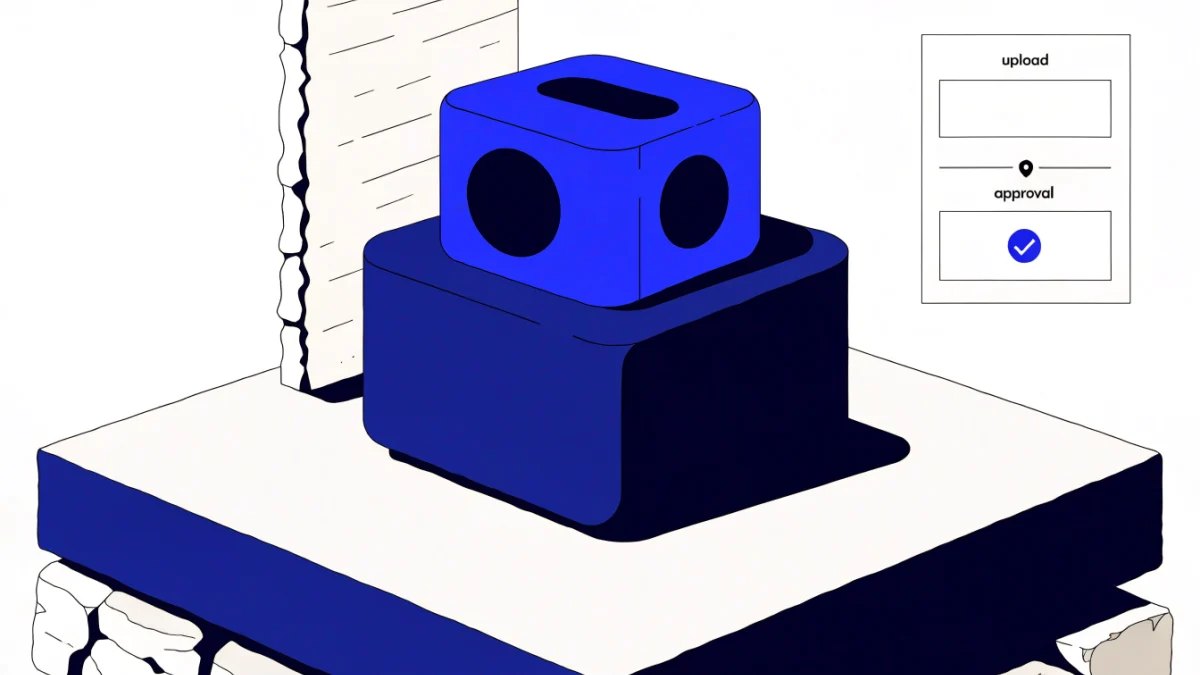
Detailed In Design could build a submission and review workflow for a client that accepts media or documents from customers, entrants, or contributors. The concrete shape: entrants upload the original camera file and any edited version separately, declare permitted edits and any generative AI use, and accept the rule version in force at submission. The system stores supporting materials, records the declared metadata alongside each file, and routes the entry to a named human reviewer with a checklist before anything reaches a public gallery, a case file, or marketing pages. Every approval decision is logged with a reviewer identity and timestamp.
A realistic example is a customer photo contest. Entrants submit the untouched original and the edited entry, disclose what changed, and attach any required releases. Staff review the package against the published rules, and only approved entries appear in the public gallery. AI can help organize documents or prepare a reviewer checklist where useful; it should not decide scientific validity or authorship.
The limitations deserve equal emphasis. The workflow needs client-defined rules, consent and retention policies, authorized storage, and qualified reviewers. File hashes prove byte identity, not factual authenticity, and declared metadata can be incomplete or false. Human expert review remains necessary, and no responsible vendor should promise a universal AI detector or a scientific authenticity guarantee. This is a proposed custom Detailed In Design system, separate from Nikon's competition; no partnership with Nikon and no already-built product is claimed.
A restrained next step
If your organization publishes submitted images, video, or documents, the useful question is not whether AI was used somewhere in the world. It is whether you can prove, from your own records, what was submitted, what was declared, and who approved it. If that question has no clean answer, we are glad to discuss a submission and review workflow sized to your actual volume.
Sources and original reporting
Share this story
Use More apps or Copy link for Instagram, Threads, YouTube, and other platforms.