What NVIDIA announced
NVIDIA announced the OpenShell Reference Architecture on October 21 at its GTC Berlin conference, according to its newsroom press release. The announcement does not introduce a new runtime. It extends the existing OpenShell secure runtime software into what NVIDIA describes as full-stack, industrial-scale infrastructure for building, containing, observing, and enforcing AI agents on enterprise systems and at the edge.
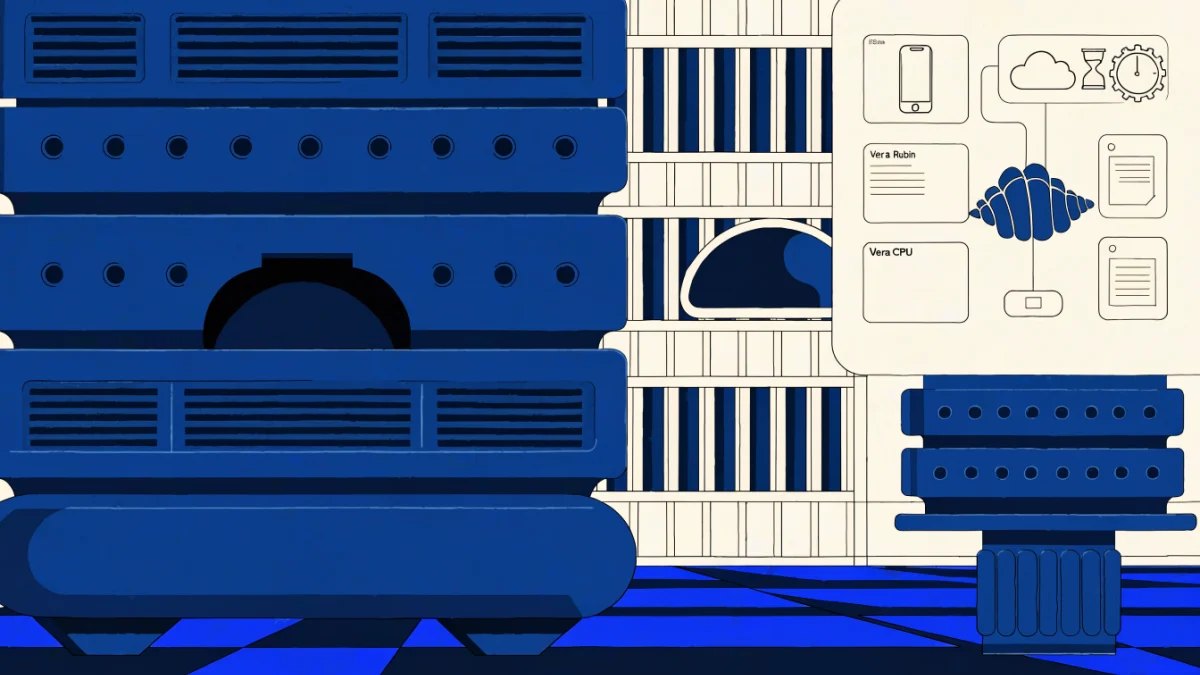
The blueprint pairs three layers. NVIDIA Vera Rubin infrastructure runs the models. NVIDIA Vera CPUs operate the agent harnesses, the software layer that lets an agent call tools. NVIDIA BlueField-4 data processing units run Sentry, which NVIDIA describes as providing continuous out-of-band monitoring of agent behavior and enforcement of policy at the silicon level, including quarantining an agent that steps outside its defined boundary. The stated division of labor, in CEO Jensen Huang's words from the release, is that agents can think on Rubin, act on Vera, and be governed on BlueField.
NVIDIA states that the reference architecture is now available and names a long partner list spanning operating system vendors, cloud providers, cybersecurity firms, banks, and enterprise software makers. Two qualifications matter for anyone reading the announcement commercially. First, the availability statement applies to the architecture itself, not to every named product or integration. Second, NVIDIA's standard disclaimer says many of the products and features described remain in various stages and will be offered on a when-and-if-available basis. Independent reporting by The Register also notes that OpenShell still has open security-related issues in its public repository. NVIDIA's own documentation describes operational telemetry that is enabled by default, with an opt-out available.
What the announcement does not establish
This is a vendor announcement corroborated by trade reporting, not an independent evaluation. The performance and containment figures in the press release, such as throughput and capacity claims and millisecond-scale response times, come without published task definitions, baselines, or third-party reproduction in the release itself, so this article does not repeat them as findings. The sources reviewed for this article do not provide an independent security evaluation showing that the architecture prevents agent misbehavior, and The Register's reporting, while independent, relies substantially on the same announcement. The right reading is that NVIDIA is proposing a structured way to bound agent access and observe agent behavior, not that agent risk has been solved.
What this means for your business
The access-control pattern can be applied in ordinary software; adopting NVIDIA's specific reference architecture requires a separate infrastructure assessment. The transferable idea is the design pattern the architecture encodes: an agent gets a defined boundary, its actions are recorded, and something outside the agent can stop it. Detailed In Design could apply that pattern today with ordinary software in a document-intake and quote-preparation workflow. Incoming customer documents would be parsed by an AI assistant that drafts a quote, but the connectors it uses would carry least-privilege access to only the folders and systems the task requires. Before any quote is sent or any customer record changes, the draft would sit in a human approval queue. Every action, including which document was read and which system was touched, would write an audit event, and a single revocation control would let a manager cut an agent's access without redeploying the system.
The expected benefit is clearer staff oversight and fewer uncontrolled handoffs between an assistant and your systems. The realistic limitations deserve equal weight. This workflow is our proposed custom build, not a product NVIDIA released and not an existing customer deployment. Detailed In Design has no verified partnership with NVIDIA. Adopting the specific reference architecture would additionally require compatible infrastructure, access to the named components, integration work, identity and data policies, testing, and operational support. A scoped workflow like the one described can be assessed against the systems you already run, and it still needs human authorization for consequential actions and deliberate testing of failure paths. We performed no independent security validation or cost comparison for anything described here.
A practical next step is a short inventory: list every AI tool your staff use, what data each can reach, and which actions currently happen without a human checkpoint. That inventory is the raw material for either a reviewed automation project or a decision to leave a tool out of sensitive workflows. Detailed In Design builds custom AI integrations, custom software, and workflow automation, and we can help you document and tighten those boundaries at the software level, where most small and mid-sized businesses actually control their exposure.
Sources and original reporting
Share this story
Use More apps or Copy link for Instagram, Threads, YouTube, and other platforms.